
Warlord: Awaji Beginner Guide: The First Things to Understand

The battle objective comes before the kill count
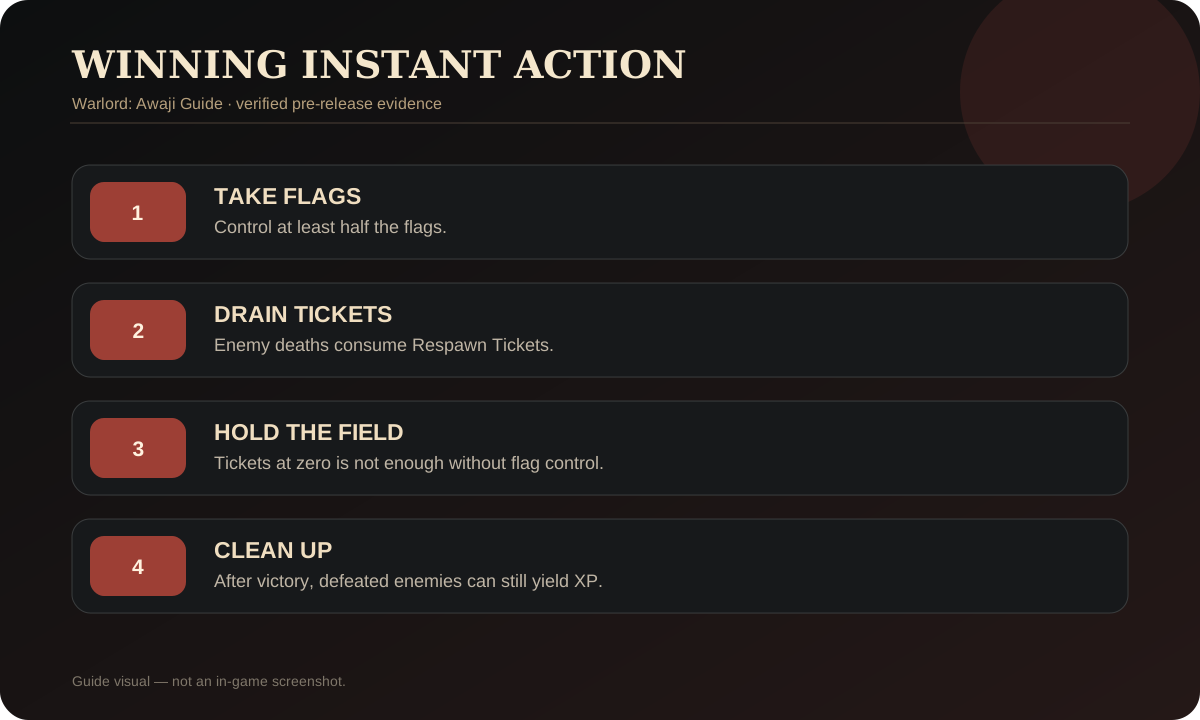
Instant Action is not a simple deathmatch. The in-game tutorial says you win by depleting the enemy team's Respawn Tickets and controlling at least half of the flags. That explains why a fight can continue even after one side has taken heavy losses.
If a battle seems stuck, check the objective before roaming for one last enemy. The useful order is:
- Stay with your side long enough to understand which banner is yours.
- Take or defend control flags.
- Force enemy respawns through clean kills.
- Watch the ticket balance rather than judging the battle by bodies on the ground.
- Once the enemy is out of tickets, make sure your team still controls enough flags to close the match.
Treat stamina as your defensive budget
Stamina is used for blocking and regenerates automatically. The dangerous part is what happens near empty: attacks can still hurt you through a block, and at zero stamina you may drop your weapon. Holding block forever is therefore a bad default.
A safer rhythm is to block the attack you need to stop, create space, let stamina recover, then re-engage. If you enter a crowded melee with the stamina bar already drained, you have very little margin for a second attacker.
Armor changes where you should hit
Armor reduces incoming damage. The tutorial specifically tells players to target unarmored body parts. That makes target selection more important than simply swinging at center mass.
Look for exposed limbs or other uncovered areas, especially against visibly better-equipped warriors. This is also why weapon reach matters: a long polearm can give you safer access to openings, but range alone does not make a weapon automatically best.
XP is progression, not just a score
Kills award XP, XP raises your character level, and levels unlock additional equipment options. Several playtest videos show players returning to the menu specifically to check what became available after leveling.
There are also post-battle XP opportunities, but they should be treated separately from ordinary combat XP. See the Post-Battle XP guide before assuming every downed body or surrendered warrior works the same way.
Do not confuse the combat playtest with the full campaign
The playtest is a vertical slice built around Instant Action, limited customization and progression. The current Steam listing describes a much larger full-game loop involving an open world, army management, mobile camps, villages and forts, shrines, ranged and cavalry troops, and individual warrior progression.
That means two kinds of advice need to stay separate:
| Safe to use now | Wait for release verification |
|---|---|
| Instant Action win condition | Exact campaign economy |
| Stamina and blocking | Exact recruitment costs |
| Armor and exposed weak points | Retainer unlock level |
| XP unlocks equipment | Exact weapon/armor level table |
| Wounded/surrender states | Best army composition |
Best next guides
If the basics already make sense, go next to How to Win Battles, Stamina & Blocking, and XP & Leveling. Those three pages solve most of the confusion that repeatedly appeared in long-form playtest footage.